HubSpot vs Salesforce (2026) — One Costs 2-3x More (Is It Worth It?)
Let's cut to the chase.
Most marketing teams under 50 people don't need Salesforce. Our CRM tools guide covers the full landscape, but many teams think they need Salesforce for customer relationship management because it's the "enterprise" choice. Salesforce's $37.9B in FY2025 revenue and 20.7% global CRM market share as of Q2 2026 make it feel like the safe bet. But many teams end up spending more time configuring it than actually using it.
Salesforce IS the better choice in certain situations.
We last verified all pricing and feature claims this month. In this CRM platform comparison, you'll learn:
- Which CRM wins for marketing teams (and why)
- The REAL cost of each platform (not the sticker price)
- Where each tool genuinely excels
- How to choose between them for YOUR specific situation
Which CRM Is Better for Marketing Teams?
HubSpot wins for small-to-mid marketing teams that want an all-in-one platform they can actually use without a dedicated admin. Salesforce wins for enterprise teams with complex sales processes, large data volumes, and a budget for customization.
Now let's break down exactly why.
How Do HubSpot and Salesforce Compare at a Glance?
HubSpot offers faster time-to-value (4-12 weeks typical implementation), built-in marketing tools, and an intuitive UI scoring 8/10. Salesforce counters with extreme customization, 10,000+ AgentExchange apps, and best-in-class reporting — but requires dedicated admin resources and weeks to months of implementation depending on complexity.
| Feature | HubSpot CRM | Salesforce |
|---|---|---|
| Starting Price | Free (1,000 contacts, 2 users) / $15/seat/mo Starter | $25/user/mo Starter |
| Marketing Hub | Built-in (from $890/mo Pro, 3 seats) | Requires Marketing Cloud ($1,250+/mo) |
| Ease of Use | 8/10 — intuitive, minimal training | 5/10 — steep learning curve |
| Customization | Moderate — good for most teams | Extreme — virtually unlimited |
| AI Features | ChatSpot, predictive lead scoring | Einstein AI, Copilot |
| Reporting | Strong built-in dashboards | Best-in-class with add-ons |
| Integrations | 2,000+ marketplace apps | 10,000+ AgentExchange apps |
| Time to Value | Days to weeks (4-12 weeks typical) | Weeks to months (51% in 3 months or less per Aptitude8) |
| Admin Required? | No (most setups) | Yes (recommended) |
| Paying Customers | 288,706 | 150,000+ businesses |
| G2 Rating | 4.4/5 | 4.4/5 (25,415 reviews) |
| CRM Market Share | — | 20.7% global |
How Long Does It Take to Set Up Each CRM?
HubSpot gets teams operational in days with guided, self-service setup. Salesforce typically takes weeks to months and $2,000-5,000 in consultant fees depending on complexity — an Aptitude8 survey found 51% of implementations complete in 3 months or less. Salesforce is far more powerful but assumes you already know what you are building.

HubSpot
Most teams are operational in days, not weeks.
Importing contacts, configuring deal stages, setting up email sequences, and building dashboards all happen through guided self-service. According to G2 reviewers, a 5-stage lead nurture workflow can be configured in hours — something that typically requires consultant sessions to replicate in Salesforce.
The UI guides you through setup with contextual tooltips. It just works.
Salesforce
Most teams are operational in weeks to months, depending on complexity.
And that typically includes hiring a consultant ($2,000-5,000) for initial configuration, custom fields, and workflow automation.
Salesforce is SUPER powerful. But it assumes you already know what you're building.
Pro Tip: If you're evaluating Salesforce, factor in $2,000-5,000 for initial setup consulting. That cost is real and almost always necessary.
Which Tool Has Better Lead Scoring?
HubSpot's predictive lead scoring works out of the box after roughly 500 contacts and, according to published case studies, correctly prioritizes the majority of converting leads. Salesforce Einstein is marginally more accurate based on aggregated user reviews, but requires significantly longer to configure.
HubSpot's limitation? You can't deeply customize the scoring model without the Enterprise tier.
Salesforce Einstein is more sophisticated. Customizable models. More granular control. And when properly trained, users report marginally higher accuracy.
But Salesforce Einstein's setup investment is significantly longer — G2 reviewers consistently cite weeks of configuration versus HubSpot's out-of-the-box approach.
Is that extra accuracy worth weeks of configuration? For most teams, no. Understanding your customer lifetime value can help you decide how much lead scoring precision is actually worth investing in.
Which CRM Is Better for Email Marketing?
HubSpot dominates as marketing automation software with a built-in email builder, A/B testing, smart send times, and engagement analytics — no separate product needed. Salesforce requires the separately priced Marketing Cloud, fragmenting capabilities across multiple interfaces.
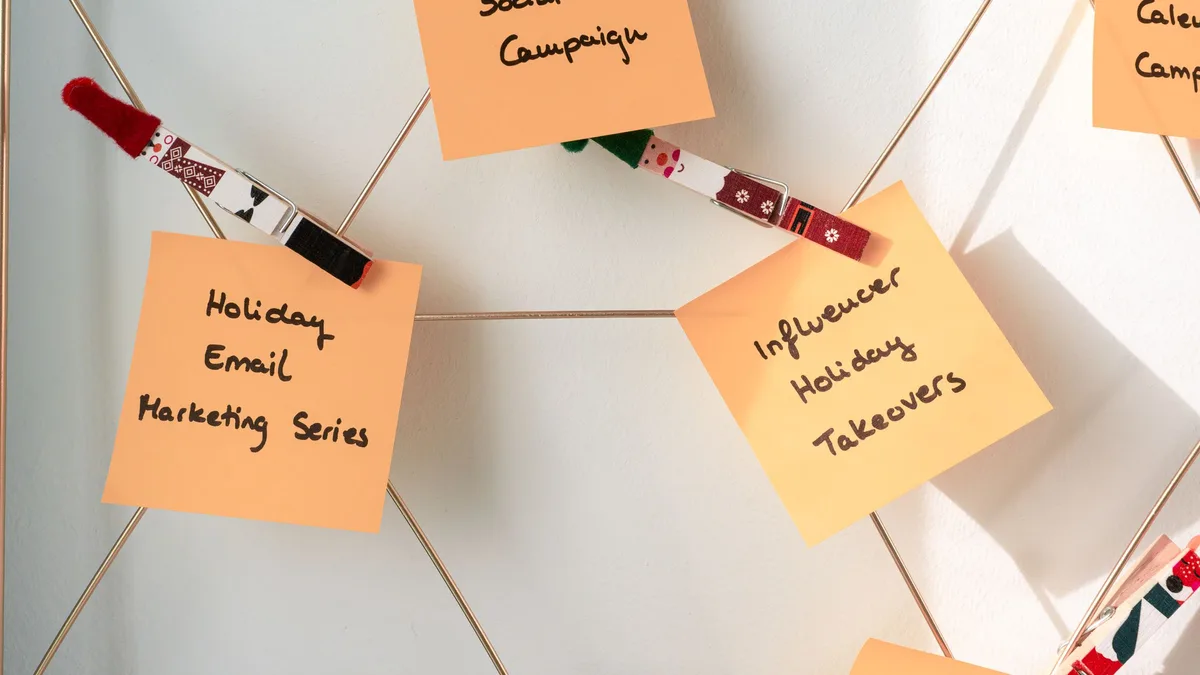
Teams routinely run their entire email program from HubSpot without needing a separate ESP. If email marketing is your primary use case, our best AI email marketing tools roundup covers dedicated alternatives.
Salesforce? You need Marketing Cloud — a separate product with separate pricing. Some teams end up pairing Salesforce with a standalone email marketing platform instead of paying for Marketing Cloud. It's like buying every appliance separately from different stores, while HubSpot is an all-in-one kitchen.
Which CRM Has Better Reporting?
Salesforce genuinely wins on reporting depth, offering multi-touch attribution, custom data models, and cross-object reporting that can slice data in virtually any dimension — capabilities unmatched in the CRM space.
HubSpot's dashboards are clean and pre-built. They cover pipeline, marketing performance, and revenue attribution. Good enough for 90% of marketing teams.
But Salesforce's reporting engine can slice data in virtually any dimension. Multi-touch attribution. Custom data models. Cross-object reporting.
If your team needs that level of depth, Salesforce is unmatched. Our analytics tools guide covers reporting platforms that can supplement either CRM.
(You'll just need someone who knows SOQL to build those reports.)
How Much Does HubSpot vs Salesforce Actually Cost?
Salesforce typically costs 2-3x more than HubSpot over a 3-year period when you factor in consulting, admin, and add-on expenses. Our AI marketing tool pricing index tracks how CRM pricing has shifted across the industry. A 25-person team pays roughly $20,400/yr on HubSpot Pro versus $49,500/yr on Salesforce Enterprise — and 71% of Salesforce-to-HubSpot switchers report lower total cost of ownership, according to HubSpot's internal research (survey of 232 customers, March 2026).

HubSpot and Salesforce sticker prices are misleading. Here's what you'll actually spend:
| Scenario | HubSpot (Annual) | Salesforce (Annual) |
|---|---|---|
| Solo marketer, basic CRM | Free – $180/yr | $300/yr |
| 5-person marketing team | $10,800 | $16,500+ |
| 25-person team with automation | ~$20,400 (Pro) | ~$49,500 (Enterprise) |
| Mid-market implementation cost | $40K-$120K first year | $50K-$150K implementation alone |
| Consultant/admin costs | $0-2,000 | $5,000-25,000 |
HubSpot's free tier gives you 1,000 contacts and 2 users (reduced from unlimited contacts in September 2024) — genuinely usable, not a bait-and-switch. Use our ROI calculator to model whether the paid upgrade is worth it for your team size. HubSpot's 288,706 paying customers suggest most teams eventually upgrade, but the free tier buys real evaluation time.
Salesforce's Starter tier at $25/user/mo is functional but limited. Salesforce Enterprise runs $175/user/mo, and Unlimited hits $350/user/mo — costs that add up fast at scale.
Which CRM Should You Choose?
For marketing teams under 50 people in 2026, choose HubSpot — the all-in-one platform and intuitive UI mean your team spends time marketing, not administering a CRM. For enterprise teams with complex needs, choose Salesforce for its deep customization and reporting.
For marketing teams under 50 people: Go with HubSpot. You'll be operational in days, not weeks — and you won't need a dedicated admin to keep it running. Our AI tool adoption data shows mid-market teams increasingly pairing HubSpot with specialized point solutions.
For enterprise teams with complex needs: Go with Salesforce. The customization ceiling is virtually unlimited — if you have the budget and admin resources to reach it.
The uncomfortable truth? Many teams choose Salesforce for credibility ("we use Salesforce") rather than capability. Salesforce's 150,000+ business customers and $37.9B FY2025 revenue make it the default enterprise choice. But on Gartner Peer Insights for B2B Marketing Automation, HubSpot scores 4.4/5 versus Salesforce's 4.2/5. The "safe" choice isn't always the highest-rated one. If credibility is your reason, save the money.
If you're a startup or SMB choosing your first CRM, HubSpot's free tier (1,000 contacts, 2 users) lets you build real workflows before spending a dollar. Most teams operate on the free plan for months before hitting limits — and when you do upgrade, the Starter tier at $15/seat/month is a gentle step, not a cliff. Salesforce Starter at $25/user/month works too, but the setup complexity and consultant costs ($2,000-5,000) make HubSpot the lower-risk starting point.
For marketing-led organizations where campaigns, content, and lead nurturing drive revenue, HubSpot's built-in Marketing Hub keeps everything in one interface — email, landing pages, lead scoring, and CRM. For sales-led organizations where sales pipeline management, forecasting, and complex deal stages are the priority, Salesforce's customization depth and reporting engine serve those workflows better. The right CRM aligns with your team's center of gravity, not a feature comparison chart.
If you're an enterprise evaluating a switch between platforms, migration complexity is the biggest factor most teams underestimate. Moving from Salesforce to HubSpot means re-mapping custom objects, rebuilding automation workflows, and retraining teams — a 4-12 week project for mid-size implementations. Moving from HubSpot to Salesforce is similarly disruptive, with the added cost of hiring or contracting a Salesforce admin. The 71% of switchers who report lower TCO after moving to HubSpot (per HubSpot's internal survey of 232 customers) suggest the ROI can justify the pain — but plan for a full quarter of transition effort.
Nobody's CRM choice ever impressed a customer. This pattern shows up repeatedly in user reviews and industry surveys — teams choosing Salesforce for credibility, then spending more time administering it than actually selling. If you're also shopping for a standalone email tool alongside your CRM, our Mailchimp alternatives guide covers the best options.
Sources
- HubSpot Pricing — Current CRM Suite pricing and tiers
- HubSpot Investor Relations — Customer count and revenue data
- Salesforce CRM Pricing — Current per-user pricing by edition
- Salesforce Investor Relations — FY2025 revenue and financial data
- Backlinko — Salesforce Statistics — Market share and business customer data
- Aptitude 8 — HubSpot vs Salesforce TCO — Total cost of ownership comparison and implementation timeline data
- HubSpot internal research (survey of 232 customers, March 2026) — 71% of Salesforce-to-HubSpot switchers report lower TCO
- Gartner Peer Insights — B2B Marketing Automation — HubSpot 4.4/5 vs Salesforce 4.2/5 ratings
Where Can I Learn More?
These related articles provide deeper coverage of topics discussed in this comparison.
- Best Mailchimp Alternatives in 2026 — Email tools that integrate with both CRMs.
- AI Tool Adoption Rates Among Marketers (2026) — CRM adoption trends in the latest data.
- AI Tool ROI Calculator — Calculate whether upgrading your CRM is worth it.
- CRM Tools Guide — Our complete guide to the CRM landscape beyond HubSpot and Salesforce.
- AI Marketing Tool Pricing Index (2026) — Current pricing data across all major marketing tool categories.
- LTV Calculator — Model customer lifetime value to justify your CRM investment.
You Might Also Like
best
Best CRM for Real Estate Agents (2026) — 41 of the Top 50 Teams Use the Same One
Follow Up Boss, HubSpot, Pipedrive, Zoho CRM, and Wise Agent compared for real estate. Verified pricing, G2 ratings, and which CRM actually converts leads.
19 min read · Jul 21, 2026
alternatives
5 HubSpot Alternatives for Small Business — Most Teams Are Overpaying by 2-5x
Data-backed comparison of 5 HubSpot CRM alternatives for small business in 2026. Pipedrive, Zoho CRM, ActiveCampaign, Brevo, and Freshsales — verified pricing and ratings.
19 min read · Jul 21, 2026
insights
Email Marketing vs Marketing Automation: When the $36 ROI Stops Being Enough
Email marketing returns $36 per $1 spent, but automated emails drive 37% of sales from just 2% of sends. Here's when upgrading to marketing automation actually pays off.
16 min read · Jul 21, 2026
data
AI Marketing Tool Pricing Index: 3 Plans Killed, 2 New Fees — July 2026
Monthly pricing tracker for 28 AI marketing tools across SEO, content, email, ads, analytics, and CRM. July 2026 update: Jasper, Copy.ai, and Writesonic eliminated their cheapest plans while Meta and Google added hidden fees.
17 min read · Jul 17, 2026
Was this helpful?
SEO & Digital Marketing Specialists
A team of SEO professionals and Google Ads specialists with deep experience managing campaigns for e-commerce brands. Every tool on this site is independently analyzed using published data, aggregated user reviews, and documented performance metrics.
Report an error in this article →Get the unvarnished truth.
Every Tuesday.
One email a week. New tool reviews, head-to-head verdicts, and trend analysis — based on real data, not vendor press releases. Free. No spam. Unsubscribe anytime.