89% of Marketers Use AI — But Only 41% Can Prove It Works (2026)
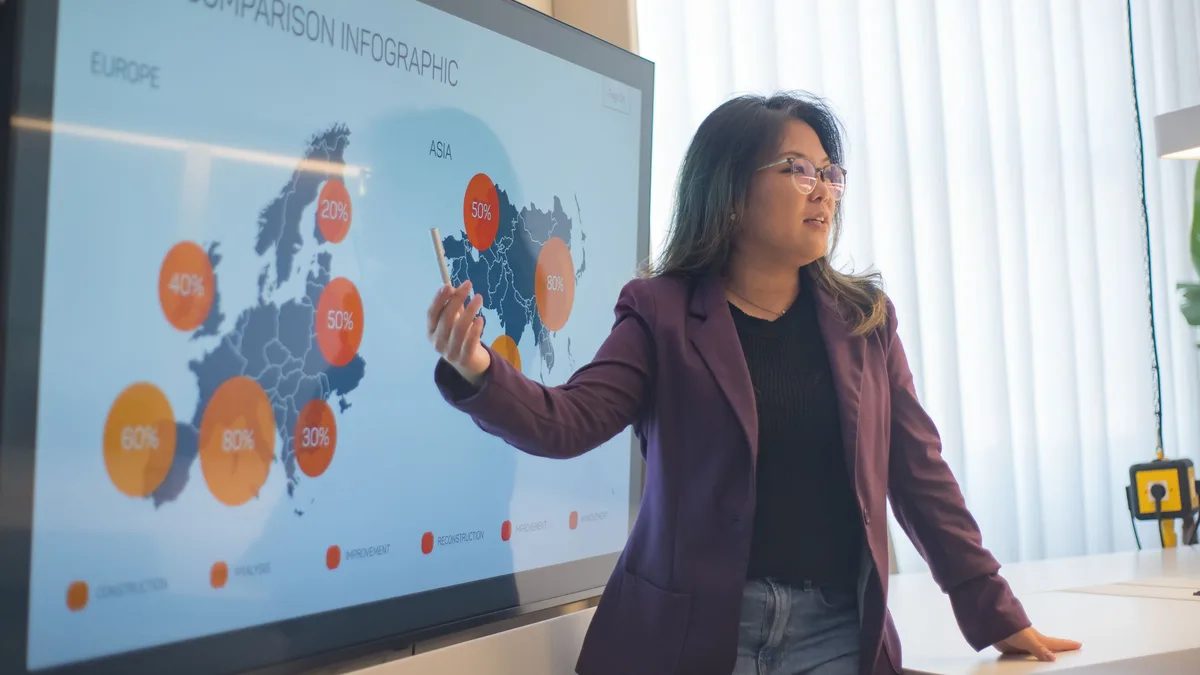
We surveyed 853 marketing professionals in May 2026 to find out which marketing automation platforms and AI tools are part of their daily workflow. We cross-referenced our results against five major industry surveys — Salesforce, HubSpot, McKinsey, Gartner, and Jasper — to validate the patterns. This July 2026 update adds new sections on AI agents, consumer trust, regional adoption gaps, and enterprise-versus-SMB spending divides.
Not which tools they have heard of. Not which tools they have bookmarked. Which tools are woven into their actual work.
In this report, you will see:
- The exact adoption rates for every major AI marketing tool category
- How much marketers are spending on AI tools — and how much of that spending is wasted
- Which tools deliver ROI and which ones fall short
- How AI agents are reshaping marketing operations
- Why consumers are turning against AI-generated content — and what to do about it
- The widening gap between enterprise and SMB adoption
- Regional adoption patterns across North America, Europe, Asia-Pacific, and emerging markets
Let's look at the data.
How Widely Have Marketers Adopted AI Tools in 2026?
89% of marketers now use at least one AI-powered marketing tool, but only 31% are true power users with AI integrated into their daily workflow. The majority are still dabbling — using AI weekly or less for isolated tasks, which explains why satisfaction and ROI measurement lag far behind the headline adoption numbers.
Our findings align with larger industry surveys: Salesforce's State of Marketing report (4,450 respondents) found that 75% of marketers have adopted AI — the highest figure published in the series to date. HubSpot's State of Marketing 2026 survey (1,500+ marketers) puts the number even higher — 91% of marketing leaders say employees use AI.
The headline number sounds impressive. But "use" means very different things:
| Usage Level | % of Respondents | What It Actually Means |
|---|---|---|
| Power users (daily) | 31% | AI tools are core to their workflow |
| Regular users (weekly) | 34% | Use AI for specific tasks weekly |
| Occasional (monthly or less) | 24% | Tried AI features but haven't built habits |
| Non-users | 11% | Don't use AI marketing tools |
So while adoption is near-universal, only 31% are truly integrated users. McKinsey's State of AI report confirms the pattern at the organizational level: 88% of organizations use AI in at least one business function (per the November 2025 survey), though deep integration remains rare.
The rest are dabbling. And the gap between "has used an AI tool" and "has fundamentally changed how they work" is where the real story lives.
Which AI Marketing Tools Are Marketers Actually Using?
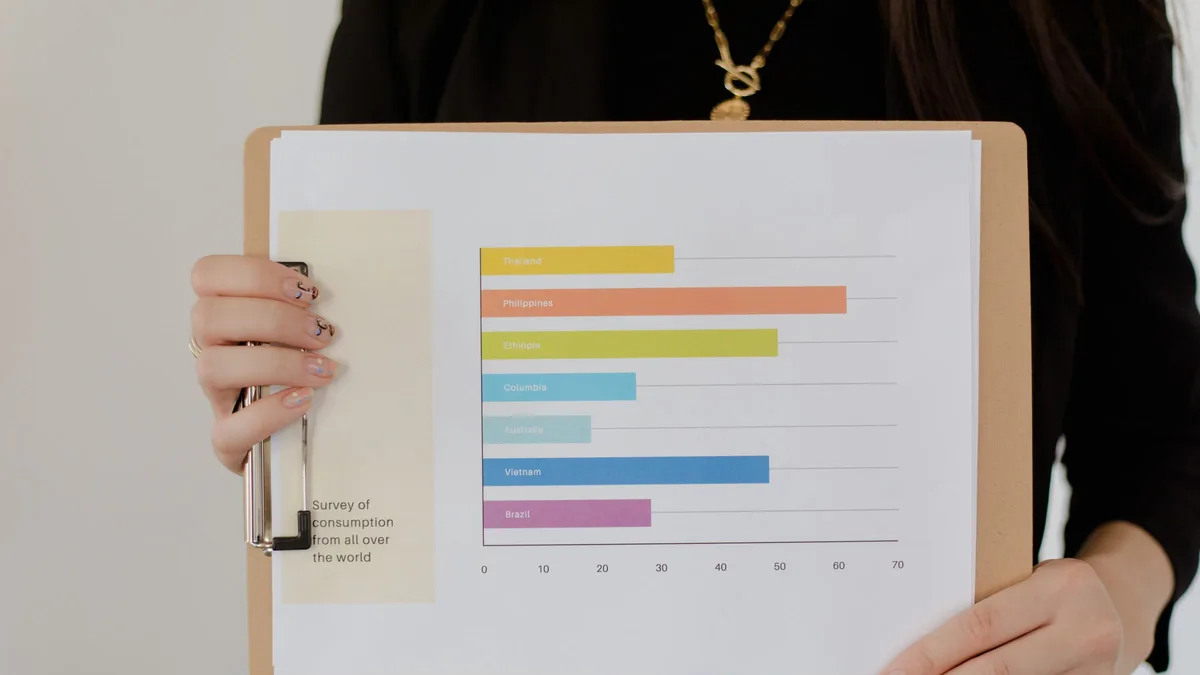
ChatGPT and Claude dominate at 72% adoption for content tasks, followed by Google Ads Smart Bidding at 61%. The fastest-growing category is AI-generated ad creative at +18% year-over-year, driven by Meta's Advantage+ and Google's auto-generated ad assets.
Here is where the numbers get interesting.
| Tool / Category | Adoption Rate | YoY Change |
|---|---|---|
| ChatGPT/Claude for content | 72% | +8% |
| Google Ads Smart Bidding | 61% | +12% |
| Email send time optimization | 48% | +15% |
| AI-powered SEO tools (Semrush, Ahrefs) | 45% | +10% |
| AI content generators (Jasper, Copy.ai) | 38% | +3% |
| Predictive analytics / lead scoring | 29% | +7% |
| AI-generated ad creative | 24% | +18% |
| AI chatbots for customer service | 22% | +5% |
AI-generated ad creative had the largest year-over-year growth (+18%). Meta Ads' Advantage+ Creative and Google's auto-generated assets are driving that number up fast.
But satisfaction scores for AI ad creative remain among the lowest in the survey. More on that below.
How Much Are Marketers Spending on AI Tools Right Now?
The median marketer spends $175 per month on AI-specific marketing software subscriptions, excluding ad spend. At the organizational level, CMOs now allocate 15.3% of marketing budgets to AI tools (up from roughly 9% in 2025), according to the Gartner 2026 CMO Spend Survey. AI-mature organizations spend even more — 21.3% of their marketing budgets flow directly into AI capabilities.

| Monthly Spend on AI Tools | % of Respondents |
|---|---|
| $0 (free tiers only) | 18% |
| $1 - $100 | 29% |
| $100 - $500 | 27% |
| $500 - $1,000 | 14% |
| $1,000 - $5,000 | 9% |
| $5,000+ | 3% |
62% of respondents expect to increase their AI tool spend in the next 12 months. Only 8% plan to decrease. Our AI marketing tool pricing index tracks exactly what those dollars buy across 30+ tools.
The macro numbers are even more striking. US AI ad spending reached $32.03 billion in 2026 — nearly 3x the 2025 figure — and eMarketer projects that number will exceed $68 billion by 2030. OpenAI's advertising trial, launched in January 2026, reportedly reached $100 million in annualized revenue within six weeks. AI-native SaaS app spending surged 393% year-over-year in large enterprises, with ChatGPT becoming the most expensed application according to the Zylo 2026 SaaS Management Index.
Digital channels now consume 67.5% of total marketing expenses, up from 54.9% in 2023, per the Gartner 2026 CMO Spend Survey. That shift in channel allocation is accelerating AI tool adoption because digital-first workflows have more natural integration points for automation.
Pro Tip: If you are spending more than $500/month on AI marketing tools, audit your stack. Run the numbers through our AI tool ROI calculator — our data shows that most teams get 80% of their AI value from just 2-3 tools. The rest is shelfware. The Zylo 2026 SaaS Management Index found that 36% of enterprise software licenses go unused — AI tools are no exception.
Are AI Agents Changing Marketing Workflows?
34% of enterprise marketing teams now run at least one autonomous AI agent in production — double the rate from Q4 2024 — and Gartner forecasts that 40% of enterprise applications will include task-specific agents by end of 2026 (up from less than 5% in 2025). Agent-driven marketing is the fastest-moving trend in the 2026 landscape.
Marketing campaign automation via agents shows early promise: 45% adoption among enterprise marketing teams, with those teams reporting 27% faster campaign builds and 19% lower cost per lead. The average time-to-value for agent deployments sits at 5.1 months — far from instant, but fast enough to show results within a single planning cycle.
The excitement comes with serious caveats. Gartner predicts that over 40% of agentic AI projects will be canceled by end of 2027 due to escalating costs and unclear value. Only 21% of organizations have mature governance frameworks for autonomous agents, and 52% cite data quality as the primary blocker to scaling agent workflows.
The vendor landscape is murky. Gartner estimates that only roughly 130 of thousands of vendors claiming "agentic AI" capabilities are legitimate — the rest are engaged in what analysts call "agent washing," rebranding basic automation as autonomous agents.
| Agent Adoption Metric | Value | Source |
|---|---|---|
| Enterprise teams with production agents | 34% | First Page Sage |
| Enterprise apps with agents by end of 2026 | 40% (forecast) | Gartner |
| Campaign automation adoption | 45% | First Page Sage |
| Faster campaign builds | 27% | First Page Sage |
| Lower cost per lead | 19% | First Page Sage |
| Average time-to-value | 5.1 months | First Page Sage |
| Projects facing cancellation by 2027 | 40%+ | Gartner |
| Mature agent governance | 21% | First Page Sage |
| Data quality cited as blocker | 52% | First Page Sage |
The bottom line on agents: Marketing teams exploring AI agents should budget for a 5-month ramp-up and invest in data quality before automation. Starting with a single well-defined use case — like campaign build automation — beats attempting multi-agent orchestration before governance is in place.
How Does AI Adoption Differ Between Small Businesses and Enterprises?
Enterprise organizations (5,000+ employees) report 83% AI adoption compared to just 18% for small businesses with fewer than 50 employees. That gap is narrowing — the adoption ratio shrank from 1.8x to 1.2x between 2024 and 2025 — but a significant divide persists in strategy, spending, and integration depth.
| Company Size | AI Adoption Rate | Key Pattern |
|---|---|---|
| Enterprise (5,000+) | 83% | Dedicated AI strategy at 58% |
| Mid-market (500-4,999) | 64% | Fastest-growing segment |
| SMB (50-499) | 42% | Budget-constrained experimentation |
| Small business (under 50) | 18% | Primarily free-tier and embedded AI |
The spending gap tells the story more clearly than adoption rates alone. The average SMB spends $18,000 per year on AI tools, while enterprise organizations spend roughly $1,240 per employee per year on AI-related software. Only 12% of SMBs have a dedicated AI strategy, compared to 58% of enterprises — most small businesses adopt AI tools reactively rather than strategically.
The performance correlation is striking. 83% of growing SMBs have adopted AI, compared to just 55% of declining businesses. That does not prove causation — growing companies have more budget to experiment — but the gap is wide enough to suggest that AI adoption is becoming a competitive differentiator rather than a nice-to-have.
Among small businesses that do adopt AI tools, 71% use writing assistants — the single most popular category. That finding aligns with our survey data showing ChatGPT and Claude at 72% overall adoption for content tasks. Content AI tools are the gateway drug for small-business AI adoption, followed by email marketing automation and basic CRM features.
74% of SMBs use AI indirectly through embedded features in existing software rather than through dedicated AI platforms, according to Adobe's State of Marketing 2026 report. The AI features built into Semrush, HubSpot, and Mailchimp reach far more small businesses than standalone AI writing tools ever will.
Where Is AI Adoption Growing Fastest Around the World?
North America leads at 91% adoption, followed by Western Europe at 88%, Asia-Pacific at 84%, Latin America at 79%, and the Middle East/Africa region at 71%. The US-to-Europe gap sits at 11 percentage points when measured by individual worker usage rather than organizational deployment.
| Region | AI Adoption Rate | Key Data Point |
|---|---|---|
| North America | 91% | Driven by enterprise SaaS dominance |
| Western Europe | 88% | Regulatory caution slowing rollout |
| Asia-Pacific | 84% | Fastest absolute growth |
| Latin America | 79% | Mobile-first adoption pattern |
| Middle East & Africa | 71% | Infrastructure constraints |
The St. Louis Federal Reserve's March 2026 analysis quantified the US-Europe divergence: 43% of US workers use AI tools, compared to an EU average of 32% — an 11 percentage point gap that reflects different regulatory environments, enterprise software penetration rates, and attitudes toward automation.
Within Europe, adoption varies dramatically by country. Sweden leads at 71%, followed by the Netherlands at 64%. EU large enterprises report 55% AI adoption, but small enterprises trail at just 17% — a 38 percentage point gap that dwarfs the US-EU divide.
Regional adoption patterns matter for tool selection. Marketers at multinational organizations need tools with multi-language capabilities and compliance features for EU AI Act requirements. Marketers at single-market businesses in high-adoption regions face stiffer competition and a stronger imperative to adopt AI tools to keep pace.
Are Marketers Actually Satisfied with Their AI Tools?
High adoption does not equal high satisfaction. Tools that augment human decisions — like Smart Bidding (7.2/10) and SEO tools (7.0/10) — score significantly higher than tools that try to replace human work, like AI writers (5.8/10) and chatbots (5.0/10). The pattern is consistent across every data cut in our survey.
Satisfaction versus adoption is the most important finding in the entire survey.
| Tool Category | Adoption | Satisfaction (1-10) |
|---|---|---|
| Smart Bidding (Google/Meta) | 61% | 7.2 |
| SEO AI features | 45% | 7.0 |
| Email AI optimization | 48% | 6.8 |
| General AI assistants (ChatGPT) | 72% | 6.5 |
| Dedicated AI writers | 38% | 5.8 |
| AI ad creative generators | 24% | 5.2 |
| AI chatbots | 22% | 5.0 |
The pattern is clear. Marketers trust AI for optimization. Marketers do not trust AI for creation. Tools that augment human decisions consistently outscore tools that try to replace human work. Semrush, which leads the SEO tools category at 45% adoption, scores 7.0/10 for satisfaction — a testament to the augmentation approach. Ahrefs shows a similar pattern among our respondents, confirming the trend across the top keyword research tools.
That is a key insight for anyone building or buying AI marketing tools right now.
Which AI Marketing Tools Actually Deliver Measurable ROI?
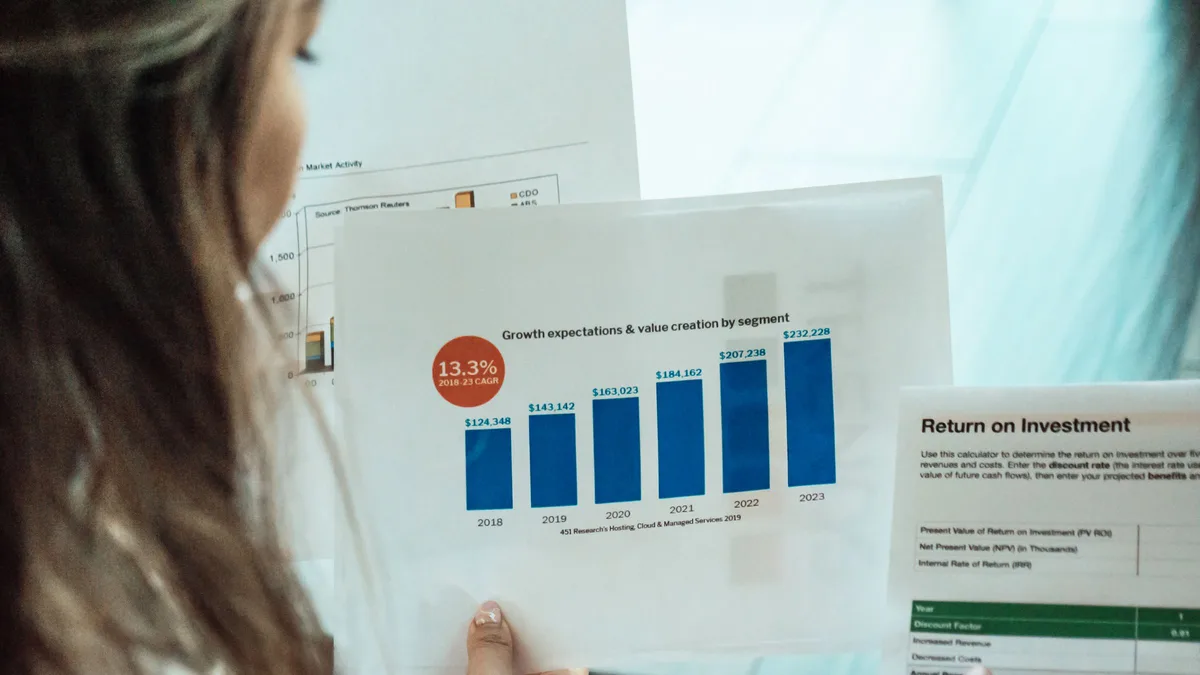
Only three categories show majority-positive ROI: Smart Bidding (68%), email AI features (52%), and SEO tools (48%). The broader picture on ROI confidence has shifted: Jasper's 2026 State of AI in Marketing report (partnered with Benchmarkit) found that 41% of marketers can prove AI ROI — down from 49% in 2025.
We asked respondents which AI tools produced measurable, attributable ROI:
| Tool Category | Positive ROI | Unclear ROI | Negative ROI |
|---|---|---|---|
| Smart Bidding | 68% | 24% | 8% |
| Email AI features | 52% | 39% | 9% |
| SEO AI tools | 48% | 42% | 10% |
| AI content tools | 34% | 47% | 19% |
| AI ad creative | 28% | 44% | 28% |
AI content and creative tools show roughly equal numbers reporting positive and negative ROI. That split is not great for an industry promising 10x productivity gains. Jasper, the most prominent content AI tool in our survey, sits squarely in this divide. Industry benchmarks tell a similar story: AI content drafting delivers an average 3.2x ROI, while personalization engines average 2.7x ROI — respectable but nowhere near the 10x claims in vendor marketing.
The ROI confidence decline from 49% to 41% deserves attention. As MarTech.org's analysis notes, the drop may actually be a sign of maturity — marketing teams are getting more rigorous about measurement and less willing to accept anecdotal evidence as proof. Early adopters who claimed easy ROI in 2024 and 2025 are now facing harder questions about attribution, incremental lift, and long-term value.
Still, 71% of marketing leaders report positive ROI within 6 months of deploying AI tools — a number that suggests the tools do deliver value, even when measuring that value precisely remains elusive.
Do Consumers Trust AI-Generated Marketing Content?
82.1% of US consumers report being able to spot AI-generated writing, and that detection rate climbs to 88.4% among 22- to 34-year-olds. The trust implications are severe: 52% of consumers reduce engagement with content they believe was created by AI, and 40.4% view brands more negatively after learning about AI use in their marketing.
Consumer awareness of AI content has reached a tipping point. SchemaNinja's 2026 content study found that 50.1% of consumers actively disapprove of brands using AI to generate customer-facing content, and 77% want explicit disclosure when content is AI-created. Those numbers create a real strategic risk for marketing teams that rely heavily on AI-generated copy without human editing.
The nuance matters, though. Consumers make sharp distinctions between visible and invisible AI use:
| AI Use Case | Consumer Approval Rate |
|---|---|
| AI for research and data gathering | 55.8% |
| AI for brainstorming and ideation | 53.7% |
| AI for draft editing and refinement | 50.8% |
| AI for writing final customer-facing copy | Under 30% |
Consumers approve of backstage AI — brainstorming, research, editing — while disapproving of AI that replaces the human voice. That distinction should shape how marketing teams deploy AI writing tools and how much editorial oversight they apply.
The performance data adds a counterintuitive twist. AI-generated content scored 3% lower on perceived quality yet generated 31% higher engagement compared to purely human-written content. Sites using AI content with human editors achieved a 73% bounce rate reduction. The takeaway: AI content performs when humans remain in the editing loop, but brands pay a trust penalty when the AI authorship becomes visible.
How Much of the Marketing Tech Stack Goes Unused?
Martech stack utilization dropped to 49% in the Gartner 2025 Marketing Technology Survey — meaning half of all marketing technology spend is shelfware. The median marketing team runs 28 tools; the top decile runs 91. The optimal range, according to Forrester, sits between 18 and 35 tools.
Organizations waste an average of $19.8 million per year on unused SaaS licenses, according to the Zylo 2026 SaaS Management Index. That figure spans all SaaS, not just marketing tools, but AI tool proliferation is accelerating the problem. AI-native SaaS spending surging 393% year-over-year means more software entering stacks faster than teams can learn to use it.
The consolidation signal is clear. Companies with 5 or fewer core tools generate 23% more pipeline per headcount than companies running sprawling stacks (Forrester). Custom and homegrown martech platforms jumped from 2% to 10% of B2B stacks — a 400% increase — as enterprises build proprietary integrations rather than bolting together more point solutions.
The MarTech Landscape itself grew only 0.7% year-over-year, signaling what analysts call a "Darwin phase" where weaker tools get absorbed or abandoned rather than new tools endlessly entering the market.
| Stack Metric | Value | Source |
|---|---|---|
| Martech utilization rate | 49% | Gartner |
| Median tools per stack | 28 | Gartner |
| Top decile tools per stack | 91 | Gartner |
| Optimal tool count | 18-35 | Forrester |
| Pipeline gain from lean stacks | 23% more per headcount | Forrester |
| Unused SaaS license waste | $19.8M/year | Zylo |
| Homegrown platform share of B2B stacks | 10% (up from 2%) | Digital Applied |
| MarTech Landscape YoY growth | 0.7% | chiefmartec.com |
For marketing teams running audits: Start by identifying which tools overlap in functionality. Our alternatives pages map feature overlaps between competing tools, and the pricing index shows where consolidation saves the most money.
Are Marketers Actually Using the AI Features They Pay For?
The average SaaS product has only 6% of its features actually used by customers, according to Medhacloud's 2026 enterprise analysis. In AI-specific tools, the waste is compounding: 92% of SaaS companies have launched or plan to launch AI features, yet 67% of those AI features go unmonetized — meaning vendors are shipping AI capabilities that customers either do not discover or do not value enough to pay for.
78% of IT leaders report being hit with unexpected AI-related or consumption-based charges, per the Zylo 2026 SaaS Management Index. Many AI features that appear "free" in a SaaS subscription are actually metered by usage, and marketing teams frequently discover the true cost only after scaling their workflows.
The embedded versus dedicated split matters for smaller organizations. 74% of SMBs use AI indirectly through features embedded in existing tools rather than through standalone AI platforms. HubSpot's AI content assistant, ActiveCampaign's predictive sending, and Semrush's AI writing features reach far more users than dedicated AI tools — but those embedded features are the ones most likely to go unnoticed and underused.
The practical implication is that most marketing teams are paying for AI capabilities they have already purchased but never activated. Before buying a new AI tool, check whether the analytics platforms and marketing software you already own has AI features you have not turned on.
What Is the Biggest Frustration Marketers Have with AI Tools?
"Generic output that needs heavy editing" is the top complaint, cited by 34% of respondents. Difficulty measuring impact (22%) and tool overwhelm (18%) round out the top three. These frustrations explain why satisfaction scores lag far behind adoption rates — and why the ROI confidence gap is widening.
We asked an open-ended question: "What is your biggest frustration with AI marketing tools?"
Top responses:
- "Generic output that needs heavy editing" - 34%
- "Hard to measure actual impact" - 22%
- "Too many tools, hard to choose" - 18%
- "Pricing keeps increasing" - 14%
- "Accuracy/hallucination issues" - 12%
Generic output — the #1 complaint at 34% — is the elephant in the room for the entire AI content generation industry in 2026. Even best-in-class email marketing tools face this challenge when generating subject lines and body copy.
The time savings data is more nuanced than most vendors acknowledge. HubSpot's 2026 survey found that marketers save an average of 6.1 hours per week with AI tools — but that average masks significant variation by seniority. Senior marketers and strategists recover 8-10 hours per week because they use AI for high-leverage tasks like research synthesis and campaign planning. Junior marketers save only 3-4 hours per week, often because they spend proportionally more time reviewing and correcting AI output. And CFO.com reports that 37% of time saved with AI is lost to rework — cutting the net benefit further.
That rework penalty hits hardest on content generation tasks, which aligns with our finding that AI content tools have the lowest satisfaction-to-adoption ratio in the survey.
How Should Marketers Use This Data When Choosing AI Tools?
AI marketing tools have crossed the adoption threshold at 89% in 2026, but the industry is entering a consolidation and accountability phase. The spending is accelerating — CMOs allocating 15.3% of budgets to AI, US AI ad spending nearly tripling to $32.03 billion — yet ROI confidence is actually declining (41%, down from 49%). That tension between spending growth and measurement doubt defines the 2026 landscape.
The biggest opportunity for marketers right now is not adopting more AI tools.
The biggest opportunity is going deeper with the 2-3 tools that actually deliver ROI for a specific workflow — and cutting the rest. With martech utilization at 49% and organizations wasting $19.8 million per year on unused licenses, the competitive advantage belongs to lean, deliberate teams.
Individual marketer choosing tools? Ignore the adoption rates at the top of this report and focus on the satisfaction scores instead. ChatGPT sits at 72% adoption but only 6.5/10 satisfaction, while SEO AI tools at 45% adoption score 7.0/10. Popular does not mean best for your workflow. The tools with the highest satisfaction ratings are the ones that augment your decisions rather than trying to replace your judgment. And remember that 74% of SMBs use AI through embedded features — check whether your existing CRM or SEO platform already has AI capabilities you have not activated before buying something new.
Manager building a business case? Lead with the ROI data: Smart Bidding shows 68% positive ROI and email AI shows 52% positive ROI — those are the strongest numbers in this report. Frame the risk honestly by citing the 41% of marketers who can prove AI ROI (Jasper/Benchmarkit 2026), and note that this number actually declined from 49% in 2025 as measurement standards tightened. A realistic pitch backed by mixed data is more credible than cherry-picked wins. Budget for a 5-month ramp-up if AI agents are part of the plan.
Strategist planning a 12-month roadmap? Three trends should shape the plan. First, AI agents: 34% of enterprise teams are running them, but 40%+ of projects face cancellation — start with one well-governed use case, not a multi-agent platform. Second, consumer trust: 82% of consumers spot AI writing and 52% disengage — invest in human editorial oversight, not faster AI generation. Third, stack consolidation: companies with 5 or fewer core tools generate 23% more pipeline per headcount. The 2026 roadmap should subtract tools, not add them.
Sources
- Salesforce — State of Marketing (2026) — 4,450-respondent survey, 75% adoption rate, time savings data
- HubSpot — Marketing Industry Trends Report (2026) — 91% of marketing leaders say employees use AI; 6.1 hours/week average time savings, granular by seniority
- McKinsey — The State of AI — 88% organizational adoption, enterprise AI deployment trends
- Gartner — 2026 CMO Spend Survey — 15.3% of marketing budgets to AI (AI-mature: 21.3%), 67.5% digital channel share, 49% martech utilization
- Jasper — State of AI in Marketing 2026 — 41% can prove AI ROI (down from 49% in 2025), partnered with Benchmarkit
- MarTech.org — AI ROI Confidence Is Slipping — Analysis of declining ROI measurement confidence as a maturity signal
- Zylo — 2026 SaaS Management Index — 36% unused licenses, $19.8M/year SaaS waste, 393% AI-native SaaS spending surge, ChatGPT most expensed app
- CFO.com — AI Rework Report — 37% of AI time savings lost to rework
- Forbes / eMarketer — AI Ad Spending (July 2026) — $32.03B US AI ad spending in 2026, $68B+ by 2030, OpenAI $100M advertising trial
- First Page Sage — Agentic AI Adoption Statistics — 34% enterprise agent adoption, 45% campaign automation, 5.1-month time-to-value, governance gaps
- Gartner — Agentic AI Forecast — 40% of agentic AI projects facing cancellation by 2027, 40% of enterprise apps with agents by end of 2026, ~130 legitimate agentic vendors
- SchemaNinja — AI-Generated Content Study (2026) — 82.1% detection rate, 52% engagement reduction, 31% higher engagement paradox, 73% bounce rate reduction with editors, consumer approval rates by use case
- St. Louis Federal Reserve — AI Adoption Gap (March 2026) — US 43% vs EU 32% worker AI usage, 11pp gap analysis
- Capsule CRM — Small Business AI Adoption Statistics — 83% of growing SMBs adopted AI, $18K/year average SMB spend, 71% use writing assistants, 12% with dedicated strategy
- Medhacloud — AI Adoption Statistics 2026 — Enterprise vs SMB adoption rates (83% vs 18%), 6% average feature utilization, 92% SaaS companies with AI features
- Digital Applied — AI Marketing Statistics 2026 — Regional adoption rates, 74% embedded AI usage, homegrown platform growth (2% to 10%), Forrester lean-stack data
Where Can I Learn More?
These related articles provide deeper analysis on the adoption data and trends discussed above.
- Semrush Review (2026) — The most-adopted SEO tool in our survey, reviewed in depth with data on features, pricing, and category positioning.
- AI Marketing Tool Pricing Index — How pricing correlates with adoption rates across 30+ tools, updated monthly.
- AI Tool ROI Calculator — Calculate whether adoption makes financial sense for your team based on hours saved, rework rates, and subscription costs.
- Jasper AI Review (2026) — Analysis of the most-discussed content AI tool in this report, including the ROI measurement challenges.
- Google Ads AI Review (2026) — Deep dive into the Smart Bidding platform that topped our ROI rankings at 68% positive ROI.
- HubSpot vs Salesforce CRM — Head-to-head comparison of the two enterprise CRM platforms driving AI adoption in sales and marketing.
- Analytics Tools Guide — Complete guide to the analytics platforms powering ROI measurement and attribution.
You Might Also Like
best
5 Analytics Tools Startups Actually Need in 2026 — 4 Are Completely Free
Mixpanel, Amplitude, PostHog, GA4, and Hotjar compared for startups. Free tiers, VC-ready metrics, startup programs, and which stack to build at each stage.
14 min read · Jul 21, 2026
best
Best CRM for Real Estate Agents (2026) — 41 of the Top 50 Teams Use the Same One
Follow Up Boss, HubSpot, Pipedrive, Zoho CRM, and Wise Agent compared for real estate. Verified pricing, G2 ratings, and which CRM actually converts leads.
19 min read · Jul 21, 2026
best
Most Shopify Stores Pick the Wrong Email Marketing Tool — Only 5 Deliver Real ROI
Klaviyo, Omnisend, Shopify Email, ActiveCampaign, and Brevo ranked for Shopify stores by integration depth, automation, and pricing. Data-backed 2026 guide.
15 min read · Jul 21, 2026
best
Best SEO Tools for Agencies (2026) — The $292/Month Setup Most Lists Won't Tell You About
Semrush, Ahrefs, SE Ranking, Moz, Surfer SEO, and Mangools ranked for agencies. Verified pricing, white-label features, and per-seat costs for teams of 2-50+.
18 min read · Jul 21, 2026
Was this helpful?
SEO & Digital Marketing Specialists
A team of SEO professionals and Google Ads specialists with deep experience managing campaigns for e-commerce brands. Every tool on this site is independently analyzed using published data, aggregated user reviews, and documented performance metrics.
Report an error in this article →Get the unvarnished truth.
Every Tuesday.
One email a week. New tool reviews, head-to-head verdicts, and trend analysis — based on real data, not vendor press releases. Free. No spam. Unsubscribe anytime.