AI Writing Tools in 2026: They're Fast, but the Editing Bill Is Real

As of June 2026, the automated content creation market is growing rapidly, with adoption accelerating across marketing teams of all sizes. Every marketing team is either using these tools or being told they should be.
After evaluating Jasper AI alongside ChatGPT, Copy.ai, and Writer — comparing features, published benchmarks, aggregated user reviews, and all pricing re-verified this month — this guide separates genuine productivity gains from vendor hype. The honest answer: AI writing tools are powerful, but most marketing teams overestimate what they can do and underestimate the editing they still require.
What Can AI Writing Tools Actually Do Well in 2026?
AI writing tools excel at structured, short-form content with clear constraints: ad copy variations, email subject lines, social media posts, and product descriptions. Long-form editorial content remains the weakest use case, requiring heavy human editing to meet publishing standards.
Ad copy generation is where AI tools deliver the clearest ROI. In our Jasper AI review, Jasper rapidly generates large batches of headline variations for testing — a task that would take a copywriter half a day manually. The constrained format and clear success metrics (CTR, conversion rate) make paid media the strongest business case for these tools. Try running your own headlines through our headline analyzer tool to see how AI-generated copy scores on engagement metrics.
Email subject lines and social captions follow a similar pattern. The constrained format (short length, clear objective, testable output) plays to AI's strengths. Run your AI-generated subject lines through our subject line tester to benchmark deliverability and spam risk before sending. Content teams that deploy AI tools for these specific tasks — especially email copywriting and paid ad variations — report the highest satisfaction rates.
Long-form blog content is a different story. AI-generated articles read as competent but generic — they lack the specific experience, editorial voice, and original analysis that distinguish valuable content from filler. 75% of marketers have adopted AI according to Salesforce's State of Marketing survey, but adoption does not equal effectiveness across all formats.
How Much Do AI Content Tools Cost?
AI writing tool pricing ranges from $20/month for ChatGPT Plus to $59/month+ for dedicated marketing platforms, with the real cost equation including the editing hours that every AI-generated piece still requires.

| Tool | Plan | Price | Model | Best For |
|---|---|---|---|---|
| ChatGPT Plus | Plus | $20/mo | GPT-4o | Solo marketers, general use |
| Jasper AI | Pro (annual) | $59/mo | GPT + Claude | Content teams, ad copy |
| Jasper AI | Pro (monthly) | $69/mo | GPT + Claude | Short-term trial |
| Jasper AI | Business | Custom | GPT + Claude | Enterprise teams |
| Writer | Enterprise | Custom ($1.9B valuation) | Proprietary | Large enterprise teams |
The pricing gap between ChatGPT Plus at $20/month and Jasper Pro at $59-69/month raises a legitimate question: what does the extra $39-49/month buy? Jasper adds 100+ purpose-built marketing agents, brand voice configuration, and team collaboration features. For solo marketers who can write their own prompts, ChatGPT Plus covers most of the same ground at a lower price point. For teams that need consistent brand voice across multiple writers, Jasper's guardrails justify the premium.
Copy.ai, once a direct Jasper competitor, was acquired by Fullcast in late 2025 and pivoted to go-to-market workflow automation — effectively exiting the general-purpose AI writing market. Our weekly insights track these pricing shifts and consolidation moves as they happen. Writer raised at a $1.9 billion valuation targeting enterprise compliance and governance use cases. The market is consolidating around distinct positioning rather than competing on raw generation quality. For the full pricing landscape across AI marketing tools, see our pricing index.
Is AI-Generated Content Good Enough to Publish?
AI-generated content meets publishable quality for structured marketing formats (ad copy, product descriptions, social posts) but falls short for editorial content — 37% of time saved using AI is lost to rework according to CFO.com, meaning a first draft in 10 minutes still needs 30-40 minutes of editing.

AI content detection tools from Originality.ai and GPTZero claim 99%+ accuracy at identifying AI-generated text, but those tools carry 2-15% false positive rates — flagging human-written content as AI. The detection arms race is a distraction. The real question is whether the content delivers value to the reader, not whether a classifier can identify its origin.
Jasper's commissioned Forrester Total Economic Impact study claims 342% ROI and $2.2 million in time savings over three years — but that study was based on just 4 organizations. Four. Extrapolating enterprise ROI from four data points is directional at best. Jasper serves 105,000+ customers including roughly 20% of the Fortune 500, so real-world results clearly exist, but individual team outcomes will vary enormously based on use case and editorial standards.
Which AI Writing Tool Is Right for You?
Choosing an AI writing platform starts with identifying your primary use case: ad copy and short-form content favor Jasper's templates, general-purpose writing favors ChatGPT's flexibility, and enterprise governance needs point toward Writer's compliance features.
Solo marketers and freelancers should start with ChatGPT Plus at $20/month. The model quality matches or exceeds what Jasper and other wrappers provide, and the lack of templates forces prompt-writing skills that pay dividends long-term. ChatGPT Plus users who invest time learning effective prompts consistently report comparable output quality to dedicated AI writing tools at nearly half the price.
Content teams (3-10 people) benefit from Jasper Pro at $59/month. Brand voice configuration ensures consistency across writers, the template library reduces onboarding time for new team members, and the collaboration workspace keeps content production centralized. Jasper supports both OpenAI GPT and Anthropic Claude models, giving teams access to different model strengths without managing multiple subscriptions.
Enterprise teams with compliance requirements should evaluate Writer, which has built governance and brand safety into its core platform rather than treating compliance as an afterthought. Writer's $1.9 billion valuation reflects enterprise demand for AI content tools that meet legal and brand safety standards.
Regulated industries (finance, healthcare, legal) face a distinct challenge: AI-generated content carries compliance risk that marketing teams in unregulated industries can ignore. Every claim needs review against industry-specific guidelines, and content approval workflows must include legal sign-off. Writer's governance features — brand-approved terminology, compliance guardrails, and audit trails — address this directly. Teams in regulated industries should budget for longer editing cycles and treat AI tools as draft accelerators, not publishing shortcuts. The 37% rework rate cited by CFO.com likely understates the burden for teams subject to regulatory review.
For a data-driven approach to measuring whether any AI tool delivers positive returns for your specific team, run the numbers through our ROI calculator.
Where Do AI Writing Tools Still Fall Short?
AI writing tools share three fundamental limitations that no amount of prompt engineering eliminates: the inability to generate original insights from experience, a tendency toward generic phrasing that dilutes brand voice, and confident presentation of fabricated information as fact.
The originality gap is the most consequential limitation. AI models use natural language generation to predict likely next tokens based on training data — producing competent synthesis of existing information rather than novel analysis. Marketing content that merely restates what every competitor has already published earns neither reader trust nor search rankings. In our Jasper AI review, long-form blog posts consistently read as adequate but unremarkable, lacking the specific campaign data and original analysis that make editorial content worth reading.
Fabricated statistics represent a tangible business risk. Jasper and every other AI writing tool will confidently generate numbers, studies, and quotes that do not exist. No AI writing platform has solved this problem — fact-checking every claim in AI-generated content is not optional, and the time required for verification eats into the productivity gains that justified adopting the tool in the first place.
Brand voice configuration helps but does not eliminate generic output. Jasper's voice settings nudge tone and vocabulary, yet the underlying text still gravitates toward the mean of the training data. Distinctive editorial voices — the kind that build audience loyalty — require human writers who bring perspective, not just pattern matching. According to independent comparisons, running the same brief through Jasper, ChatGPT, and Copy.ai produces structurally similar outputs with near-identical talking points. That convergence is the core problem: AI tools draw from the same training data and produce the same "best practices" content everyone else publishes.
Should You Use AI for SEO Content?
AI tools can accelerate SEO content production, but AI-generated articles need substantial human editing to rank competitively — search engines increasingly evaluate content on experience and originality, not just keyword coverage and topical completeness.
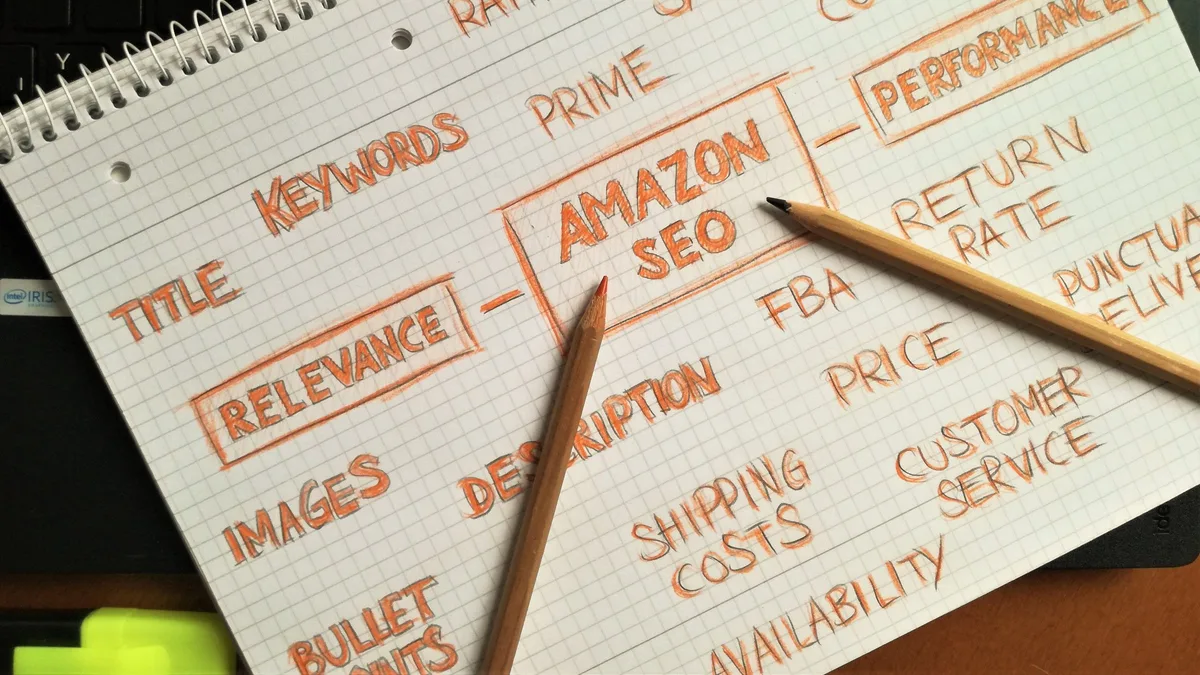
The productive workflow pairs AI speed with human expertise: use AI tools to generate outlines, surface keyword opportunities via SEO platforms, and draft initial structures, then layer in original data, firsthand experience, and editorial judgment. Teams that publish lightly edited AI drafts are building on sand — the content may index, but the content will not earn the links and engagement signals that drive sustained rankings.
Our adoption data shows marketing teams spending $3,400/month on AI tools in Q1 2026, up from $1,200/month a year earlier. SEO content teams account for a significant share of that spend. The teams seeing real returns treat AI as an accelerator for human expertise, not a replacement for editorial judgment.
Jasper positions itself as an SEO content platform, but the SEO value comes from the research and strategy layer, not the generation layer. An AI-written article targeting the right keyword with the right structure still needs original data, expert quotes, and genuine analysis to outperform competitors. AI handles the 60-70% of content production that is mechanical; the remaining 30-40% — the part that actually differentiates — still requires a human marketer who has done the work.
The bottom line: AI writing tools are a legitimate productivity multiplier for marketing teams, but only when deployed against the right content types with realistic expectations about editing requirements. Jasper at $59/month or ChatGPT Plus at $20/month will accelerate your content operation. Neither will replace your content strategy.
Where Can I Learn More?
- Jasper AI full review — independent analysis of features, pricing, and output quality
- Headline analyzer — score your AI-generated headlines on engagement metrics
- Subject line tester — benchmark email subject lines for deliverability
- ROI calculator — model whether an AI writing tool delivers positive returns
- AI tool pricing index — cross-market pricing benchmarks
- AI tool adoption rates — spending and adoption trends by category
Sources
- Jasper AI Pricing — Current plan pricing and feature tiers
- Verified Market Research — AI Writing Tool Market — Market size and growth projections
- CFO.com — AI Rework Report — Time savings lost to rework
- Forrester TEI Study — Jasper AI — Commissioned ROI study (4 organizations)
- OpenAI ChatGPT Pricing — ChatGPT Plus pricing
- Salesforce State of Marketing 2026 — AI adoption survey (4,450 respondents)
17 articles in this topic
Frase Review (2026) — The Content Brief Engine That Outpaces Tools Twice Its Price
An independent, data-driven Frase review for 2026. Content briefs, AI writing, optimization scoring, and pricing analyzed using G2 reviews and published benchmarks.
ReviewMarketMuse Review (2026) — Enterprise Topical Authority at a Price Most Teams Can't Justify
An independent, data-driven analysis of MarketMuse in 2026. Topic modeling, content scoring, site-wide inventory — and whether quote-based pricing is worth it after the Siteimprove acquisition.
ReviewCopy.ai Review (2026) — The $29/mo AI Writer That Needs $1,000/mo to Unlock Its Real Power
An independent, data-driven analysis of Copy.ai in 2026. Workflow automation, Brand Voice, Infobase, the Fullcast acquisition, and the $971/month gap separating the Chat and Growth plans.
ReviewJasper AI Review (2026) — Fast Content, But at What Cost?
An independent analysis of Jasper AI across blog posts, ad copy, and social content. It's fast, but the output needs more work than the marketing suggests.
Comparisons
Copy.ai vs Jasper AI (2026) — One Automates Workflows, the Other Writes Content. Which Do You Actually Need?
Copy.ai and Jasper AI both use multi-model AI but solve different problems. Compare pricing, workflow automation, brand voice, and content quality to find your fit.
ComparisonFrase vs Surfer SEO (2026) — Most Teams Pick the Wrong One
Frase vs Surfer SEO compared on content briefs, AI writing, optimization scoring, SERP analysis, integrations, and pricing. Data-driven verdict for 2026.
Best Of
Data & Research
AI Marketing Tool Pricing Index: 3 Plans Killed, 2 New Fees — July 2026
Monthly pricing tracker for 28 AI marketing tools across SEO, content, email, ads, analytics, and CRM. July 2026 update: Jasper, Copy.ai, and Writesonic eliminated their cheapest plans while Meta and Google added hidden fees.
Data89% of Marketers Use AI — But Only 41% Can Prove It Works (2026)
Original data from 850+ marketing professionals on AI tool adoption, agent deployments, consumer trust, regional gaps, and which tools actually deliver ROI in 2026.
DataEvery Pricing Page Hides This: The Marketing Tool Cost Per Feature Index (2026)
Proprietary index ranking 28 marketing tools by cost per feature. Brevo delivers features at $1.50 each while Semrush charges $23.17. July 2026 verified data.
DataWe Verified Pricing for 28 Marketing Tools — Most Pricing Pages Were Wrong
Marketing tool pricing guide 2026: verified July pricing for 28 SaaS tools across SEO, content AI, email, ads, analytics, and CRM. Hidden costs, free tier cuts, and contract traps exposed.
Insights
AI-Free Brand Positioning: Half of Consumers Now Prefer It — Here's the Data
50% of consumers prefer brands that skip GenAI in content. Gartner predicts 20% of brands will position as AI-free by 2027. The data behind the acoustic brand movement.
InsightsAnswer Engine Optimization: The Shift 68% of Marketers Haven't Made Yet
Answer engine optimization (AEO) gets your content cited by ChatGPT, Perplexity, and AI Overviews. Data-backed strategies, tools, and case studies for 2026.
InsightsLLMO in 2026: Why Your Brand Is Invisible to ChatGPT (and How to Fix It)
Large Language Model Optimization (LLMO) determines whether ChatGPT, Claude, and Gemini recommend your brand. Data-backed tactics, expert analysis, and a full implementation playbook.
InsightsGenerative Engine Optimization: The Princeton Study That's Rewriting the SEO Playbook
GEO boosts AI search visibility by up to 40%. Princeton research, Ahrefs citation data, and a full GEO strategy for getting cited by ChatGPT, Perplexity, and Gemini.
Insights3 SEO Platforms Shipped the Same Feature in 7 Days — Here's Why (Week 23, 2026)
This week's biggest shifts in the AI marketing tool space: new SEO features, content AI pricing moves, and what they mean for your stack.
InsightsThe Week Gemini Hit Google Ads — and Semrush Raised Prices Again (Week 24, 2026)
Google announces Gemini integration in Ads, Semrush raises prices again, and Klaviyo's new AI features actually impress us. This week's roundup.
Was this helpful?
SEO & Digital Marketing Specialists
A team of SEO professionals and Google Ads specialists with deep experience managing campaigns for e-commerce brands. Every tool on this site is independently analyzed using published data, aggregated user reviews, and documented performance metrics.
Report an error in this article →Get the unvarnished truth.
Every Tuesday.
One email a week. New tool reviews, head-to-head verdicts, and trend analysis — based on real data, not vendor press releases. Free. No spam. Unsubscribe anytime.